Home › Blog › Beards and shaves
How to Fix an Ingrown Hair From a Line Up
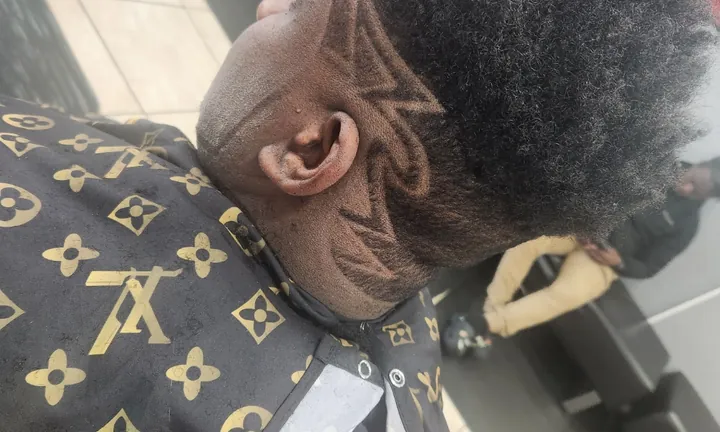
A fresh line up looks clean for about a day. Then one hair on the hairline or the back of the neck decides to grow sideways under the skin, and you have a tender bump exactly where the edge is supposed to be sharp. Ingrown hairs from line ups are the most common skin complaint we hear at the shop, and on coily hair they are close to guaranteed if the edge is cut the wrong way.
The direct answer: warm the bump with a wet washcloth, leave the trimmer and razor off it for a week or two, lift the hair only if its loop is already showing, and do not squeeze. Then change how the line gets cut so the next one does not happen. The steps, the warning signs for infection, the reasons they come back, and the way we line up men who get them are all below.
The fix in five steps
A mild ingrown hair fixes itself in one to two weeks once you stop cutting it and help it reach the surface. Your job is to soften the skin and keep your hands off. Here is the order.
- Stop cutting the area. No razor, no bare trimmer over the bump for at least 7 days. A guarded trimmer on the rest of the head is fine.
- Hold a warm, wet washcloth on the bump for 5 to 10 minutes, two or three times a day. Warmth softens the skin so the hair can surface.
- Wash the area once or twice a day with a gentle cleanser and pat it dry. Keep it clean, not scrubbed.
- Check after a compress. If a loop of hair is visible at the surface, lift the loop out with clean tweezers so the tip is free. Do not pull the hair out by the root and do not dig for a hair you cannot see.
- Moisturize with something plain, then once the soreness is gone, exfoliate lightly two or three times a week so the skin does not close over the next hair.
That is the whole fix for a bump that is red, firm and a little sore. If it is hot, swollen, or filled with pus, skip to the section on infection, because the steps change.
What an ingrown hair is, and why line ups cause them
An ingrown hair is a hair that was cut short enough to curl back and grow into the skin instead of out of it. The skin reacts the way it would to a splinter: swelling, redness, sometimes a white head. On coily and curly hair it happens more because the hair leaves the follicle at an angle and already wants to curl.
Line ups cause them because of what a line up is. To get a crisp edge on the hairline, temples, cheeks and neck, the barber cuts the hair at or below skin level, often with a straight razor. A razor cuts just under the surface and the skin closes over the stub. On straight hair the stub grows up and out. On 4C hair the stub curls, hits the wall of the follicle or the skin next to it, and grows in. Within a day or two you have a bump right on the line.
The spots that get it worst are the ones where the hair grows in a swirl or changes direction: the back of the neck, the corners of the hairline at the temples, and the crease under the jaw. Those are also the spots where men press hardest at home trying to match the barber's line, which makes it worse.
Irritated or infected: how to tell
Most ingrown hairs are irritated, not infected, and the home fix handles them. An infected one needs a doctor. The difference is heat, size and pus.
- Irritated: a small, firm bump, red or dark, a little tender, maybe a tiny white head or a visible curled hair. It stays the same size or shrinks over a week.
- Infected: the bump grows over a day or two, feels warm, is painful rather than tender, has a larger yellow or white head or drains pus, and the skin around it is swollen. A fever or red streaks spreading from it means you call a doctor the same day.
On brown and dark skin, redness is harder to see, so go by feel and size. Warm and growing is infected. Cool and shrinking is healing. When you are not sure, treat it as irritated for two days with warm compresses and clean skin, and if it is bigger or hotter on day three, get it looked at.
What to do at home for a mild one
For a mild ingrown hair, the only tools you need are a washcloth, a gentle cleanser, clean tweezers and patience. The warm compress does most of the work.
Warmth is the key because it softens the top layer of skin and lets a curled hair push through. After a compress the hair tip often appears on its own. If it does, free the tip with tweezers and leave the rest of the hair in place. The hair should keep growing out, now above the skin, and the bump flattens in a few days. If you pull the whole hair out, the follicle has to start over and the new hair often grows in exactly the same way, which is how one bump becomes a permanent spot.
Things that make it worse
- Squeezing. It pushes the hair deeper and bruises the skin, which leaves a dark mark on brown skin for months.
- Needles and pins. Unless you can see the loop, you are stabbing blind, and you are putting bacteria into an open follicle.
- Shaving over it to make it flat. It cuts the hair shorter and sends it back in.
- Harsh scrubs while it is sore. Exfoliation is for after the bump has calmed, not during.
- Alcohol heavy aftershaves and toners. They dry the skin, and dry skin tightens around the hair.
Over the counter products with salicylic acid or glycolic acid may help once the bump has calmed, by loosening dead skin over the hair. Patch test first, because dark skin can mark from irritation, and ask a pharmacist or dermatologist if you are unsure which to use. We do not recommend brands.
Why they keep coming back
If you get an ingrown hair after every line up, the cause is not bad luck. It is one of four things, and most men have two of them going at once.
Hair growth pattern and skin type
Coily hair grows at an angle and curls tightly. Where it also grows in a swirl, like the nape or the temples, the cut tip has nowhere to go but in. Thick or oily skin closes over the stub faster. Neither of these is something you change, which is why the fix is about how short the hair gets cut, not about the hair itself.
Shaving and line up habits
A razor on the edges, a bare trimmer pressed hard into the skin, going against the grain, and lining up every few days so the hair never gets above the surface. Each one cuts the hair shorter or more often than coily hair can handle. This is the cause you have the most control over.
Chronic inflammation and scarring
Each ingrown hair leaves a little scar tissue in the follicle. Scarred follicles produce hair that grows in crooked, so the same spot keeps bumping even when you do everything right. Once this has started, a dermatologist is the person to break the cycle.
Bacteria and improper home treatment
Dirty tweezers, picking, and squeezing turn an irritated bump into an infected one, and an infected follicle is more likely to scar. Clean tools, clean hands, and leaving it alone matter more than any product.
Why DIY fixes fail on repeat ingrowns
Home fixes work on one hair. They fail on the pattern, because the pattern is caused by the cut and the home fix does not change the cut.
A man who gets an ingrown on the nape every two weeks can compress it, free it and moisturize it perfectly, and he will have another one in two weeks because the next line up puts the next hair under the skin again. The products on the shelf are mostly aimed at the aftermath: calming, exfoliating, fading the marks. They are fine for that. None of them stop a razor from cutting coily hair below the surface.
The other reason DIY fails is scarring. Once a follicle has bumped a few times it is damaged, and a damaged follicle grows a crooked hair no matter how gently it is treated. At that point you are managing a skin condition, and the people who treat skin conditions are dermatologists. We will tell you when we see it, because a barber who keeps razoring a scarred neck is part of the problem.
How we change the line up for men who get ingrowns
Tell the barber you get ingrown hairs before the cape goes on and the line up changes in four ways: the tool, the depth, the direction and the spacing. The result still looks sharp. It just stops being a wound.
First, the tool. We use a bare trimmer on the edges instead of a straight razor. The trimmer leaves the hair at skin level rather than below it, so the tip has less distance to curl back. Second, the depth on the neck. Instead of taking the nape down to skin, we taper it with a half guard or a 1 guard into the hairline, which reads as clean from a normal distance and leaves the hair long enough to grow out. Third, the direction: the trimmer moves with the growth on the swirl at the nape, not against it, even though against the grain gives a crisper edge. Fourth, the spacing. Every two weeks, not every five days, so the skin heals between cuts.
| Service | Price | How we adjust it for ingrowns |
|---|---|---|
| Line up (hair shape up) | $16 | Trimmer edges, nape tapered with a half or 1 guard |
| Haircut | $25 | Neckline tapered rather than razored |
| Fade | $30 | Lowest point on a half guard instead of skin on the swirl |
| Kids cut | $20 | Trimmer only, no razor on children |
| Beard trim and sculpt | Call for pricing | Neck left at a guard, cheek line with a trimmer |
The full list is on the services page, and the hair shape up page covers the line up on its own. If you keep the edges at home between visits, follow the trimmer only method in our post on lining up a beard at home and never move the lines the barber set.
Long term prevention, and when to see a dermatologist
Long term, the men who stop getting ingrown hairs do three things: they keep the razor off the swirls, they space their line ups two weeks apart, and they exfoliate and moisturize on the days in between. The ones who still bump after that see a dermatologist, and most of them wish they had gone sooner.
If you must shave the area
Warm water first, a sharp single blade, shaving cream, with the grain, one pass, no stretching the skin, cool rinse, moisturizer. Shave no more than every two or three days. A hot towel before the blade is the best prep there is, which is why we do it before every razor service on sensitive skin.
What a dermatologist can do that we cannot
Prescription creams that calm inflammation in the follicles, treatment for the dark marks that follow bumps on brown skin, antibiotics for an infected one, and for men whose neck bumps no matter what, laser hair reduction on the nape or under the jaw. A dermatologist can also tell you whether what you have is really ingrown hairs or something that looks like them, such as folliculitis or acne keloidalis on the back of the neck, which needs different treatment.
Go if a bump lasts more than three or four weeks without being cut, if any bump is hot, swollen or draining, if you are getting raised scars or lumps on the nape, or if the same spots bump every single time. For the timeline on the bumps that come in clusters after a shave, read how long razor bumps last. For the first two days of a flare, razor bumps on Black skin covers it.
Get a line up that stays above the skin at Lilacroix Barbers
Tell us you get ingrowns and we will cut around them. Lilacroix Barbers is at 232-12 Merrick Blvd in Laurelton, where the Q5, Q86 and Q87 stop at Merrick Boulevard and 233rd Street. We are open Monday to Thursday 7:30 AM to 7 PM, Friday and Saturday 7 AM to 7 PM, and Sunday 7 AM to 5 PM. Walk ins are welcome, or call (718) 749-5800 to check the wait. Line ups, haircuts and beard trims are on our services page.
Questions readers ask
Should I pull out an ingrown hair with tweezers?
Only lift the loop if it is already visible at the surface after a warm compress, and leave the hair rooted. Pulling the whole hair out resets the follicle and the new hair often grows in the same way.
How long does an ingrown hair from a line up take to heal?
One to two weeks for a mild one once you stop cutting the area and use warm compresses. An infected one, or one on a scarred follicle, needs a doctor and takes longer.
Can I get a line up with a trimmer instead of a razor?
Yes. Ask for trimmer edges. The line is a hair softer than a razor line, lasts the same two weeks, and keeps the hair at skin level so it is far less likely to grow in.
What are the bumps on the back of my neck after a fade?
Often ingrown hairs from the nape being taken to skin on a swirl. If they are firm, keep coming back, or are turning into raised lumps, a dermatologist should check for acne keloidalis, which needs different treatment.