Home › Blog › Beards and shaves
How Long Razor Bumps Last and When to See a Dermatologist
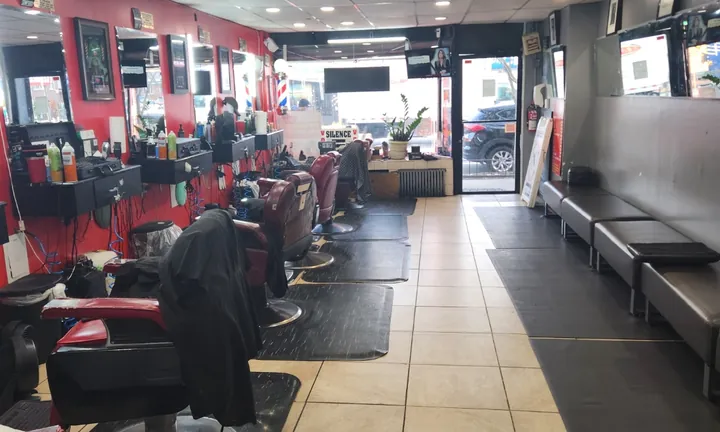
A razor bump shows up a day or two after a shave or a line up and then sits there, red or dark, firm, and sore when you turn your head. The question we get in the chair is always the same: how long is this going to take. The honest answer depends on whether you keep cutting the hair while you wait.
The direct answer: razor burn clears in hours to two days. Razor bumps take one to three weeks if you stop shaving the area, and longer if you do not. The dark marks they leave on brown and dark skin can hang around for months after the bump itself is gone. Below is the full timeline, how to tell bumps from burn, what shortens the wait, and the signs that mean a dermatologist should see it instead of a barber.
The timeline: days for burn, weeks for bumps, months for marks
Most razor bumps on coily hair resolve in one to three weeks once the hair is left alone. The clock starts when you stop shaving, not when the bump appeared, which is why men who keep shaving through them feel like they last forever.
| What you have | Typical timeline | What resets the clock |
|---|---|---|
| Razor burn (flat red sting) | A few hours to 2 days | Shaving again before it settles |
| Mild razor bumps (a few small bumps) | 7 to 14 days | Any pass with a razor or bare trimmer |
| Clustered razor bumps on the neck | 2 to 3 weeks | Picking, squeezing, shaving |
| Infected bump (pus, heat, pain) | Needs a doctor, not a timeline | Home surgery with a needle |
| Dark marks left behind | Weeks to several months | Sun, new bumps in the same spot |
These are general ranges, not a promise. Skin tone, how tightly the hair coils, how deep the hair was cut, and whether the bump got infected all move the number. If a bump is still there at four weeks with no shaving, treat that as a reason to get it looked at, which we cover at the end.
Razor bumps or razor burn: which one you have
Razor burn is irritation of the skin. Razor bumps are hair trapped under the skin. They feel similar in the first hour and then go different ways.
Razor burn is a flat, red, stinging patch that shows up right after the shave. It comes from pressure, a dull blade, dry shaving or going over the same spot too many times. It does not have raised bumps and it fades within a day or two with a cool compress and a plain moisturizer. Anyone can get it, whatever their hair texture.
Razor bumps show up a day or two later, as small firm bumps, sometimes with a white head and sometimes with a hair visible under the surface. They sit where the hair grows in a swirl, mostly the neck, under the jaw and along the cheek line. They happen because coily hair, cut short, curled back into the skin. If you have both at once, which is common after an aggressive shave, treat the burn first, since it clears fastest, and then give the bumps their weeks.
What razor bumps look like on brown and dark skin
On darker skin the bumps are often more brown or purple than red, and the mark they leave behind is darker than the surrounding skin. That mark is called post inflammatory hyperpigmentation, and it is often what men are really asking about when they ask how long bumps last.
The bump itself is a small, raised, firm spot, usually in a group. Pressing on it hurts a little. A bump that has been there a while may have a tiny loop of hair showing at the top. One that is infected looks swollen, feels warm, and may have pus. The dark mark that follows is flat, not raised, and does not hurt. Flat and painless is healing. Raised and tender is still active.
Because the marks are more visible on brown skin and last longer, prevention matters more for the men we cut than it does for lighter skin. One bump is a week. The mark from one bump can be a season.
Why some men get them every time
Tightly coiled hair is the biggest risk factor, which is why razor bumps are so common among Black men. The hair leaves the skin at an angle and curls, and anything that cuts it short and sharp sends the tip back toward the skin.
- Shaving with a razor, which cuts below the skin surface, especially a multi blade razor that lifts and cuts.
- Shaving against the grain, which cuts shorter and at a sharper angle.
- Stretching the skin while shaving, which lets the blade cut the hair below the surface and then the skin closes over it.
- Dry shaving or a dull blade, which tugs and breaks the hair instead of cutting it clean.
- Daily shaving, which never lets the skin recover between cuts.
- Shaving the neck down to skin, where the hair grows in every direction.
None of these are habits you are stuck with. Each one has a swap that keeps the hair above the skin, and the swaps are the heart of the next two sections.
What shortens the wait
Stopping the shaving is the single thing that shortens the timeline. Everything else is a helper. For a cluster of bumps, give the area three to four weeks without a razor or bare trimmer, which is long enough for most trapped hairs to grow out on their own.
In the first few days
A warm, wet washcloth held on the area for 5 to 10 minutes, two or three times a day, softens the skin and lets curled hairs surface. Wash gently with a mild cleanser and pat dry. Moisturize. If a hair loop is visible after a compress, lift it with clean tweezers without pulling the hair out. Our post on what to do about razor bumps fast lays out the first 48 hours step by step.
Once the soreness is down
Gentle exfoliation helps the skin release the hair. A soft brush on the beard area once a day, or a mild face scrub twice a week, is enough. Over the counter products with salicylic acid or glycolic acid are often suggested for this, and they may help, but patch test first because irritated brown skin marks easily. If anything stings or darkens the area, stop.
When that is not enough
A dermatologist can prescribe creams that calm the inflammation, treat an infected bump, and in persistent cases offer laser hair reduction, which some men choose for the neck. Another option is simply not shaving the area and keeping it trimmed instead, which is the route most of our regulars with bump prone skin end up taking.
Preventing the next round, in the chair and at home
The next round does not have to come. Switch the tool, leave a little length on the neck, shave with the grain if you shave at all, and space the visits so the skin heals in between.
In the chair, tell us you bump before we start. We use a bare trimmer on the edges instead of a straight razor, taper the neck with a half guard or a 1 guard instead of taking it to skin, and if you want a real shave we do it after a hot towel, with the grain, and finish with a cold towel. If you want the feel of a straight razor, start with a straight razor shave only once your skin has been clear for a month and tell the barber to stay with the grain.
| Service | Price | Spacing for bump prone skin |
|---|---|---|
| Line up (hair shape up) | $16 | Every 2 weeks, trimmer edges |
| Shave | $15 | No more than once a week |
| Straight razor shave | $15 | Only after a month of clear skin |
| Hot towel shave | Call for pricing | The gentler option when you want a close shave |
| Beard trim and sculpt | Call for pricing | Every 2 to 3 weeks |
At home: sharp blade, warm water, with the grain, one pass, no stretching, cool rinse, moisturizer. Or skip the blade and keep a 1 guard on the neck. The full price list is on our services page. For the case where one stubborn hair stays trapped after a line up, see how to fix an ingrown hair from a line up.
Complications, and when a dermatologist should see it
See a dermatologist if a bump is still raised after three to four weeks without shaving, if any bump is hot, swollen or has pus, if the bumps keep coming back in the same spots, or if you are getting raised scars. Those are the cases where waiting costs you skin.
The complications are the reason. Repeated bumps in one place cause lasting dark marks and, on some men, keloids, which are thick raised scars that keep growing past the original spot and are more common on Black skin. An infected bump left alone can turn into a deeper infection. Scarred follicles produce hair that comes in even more crooked, so the cycle feeds itself. A dermatologist can treat the infection, calm the inflammation, and work on the marks. A barber cannot do any of that, and we will say so when we see it.
For everything short of that, the answer is still the same: stop cutting the hair below the skin, give it its weeks, and change the way it gets cut so you are not counting weeks again next month.
Bring your neck to Lilacroix Barbers in Laurelton
We cut around bumps every day and we will tell you when it is time to see a doctor instead. Lilacroix Barbers is at 232-12 Merrick Blvd in Laurelton, where the Q5, Q86 and Q87 stop at Merrick Boulevard and 233rd Street. We are open Monday to Thursday 7:30 AM to 7 PM, Friday and Saturday 7 AM to 7 PM, and Sunday 7 AM to 5 PM. Walk ins are welcome, or call (718) 749-5800 to check the wait. Shaves, line ups and beard trims are on our services page.
Questions readers ask
Do razor bumps go away on their own?
Usually, yes, in one to three weeks if you stop shaving the area. Keep cutting the hair and they can stay for months, because each shave sends a new hair back into the skin.
How long do the dark marks from razor bumps last?
Weeks to several months on brown and dark skin, and longer if new bumps form in the same place or the spot gets sun. Flat and painless means it is healing.
Can I still get a line up while I have razor bumps?
Yes, with a trimmer and with the neck left at a half guard or a 1 guard instead of shaved. Tell the barber before you sit down so the razor stays in the drawer.
What is the difference between razor bumps and folliculitis?
Razor bumps are hair curling back into the skin. Folliculitis is an infected or inflamed follicle, often from bacteria. They can look alike, and if a bump is hot, swollen or filled with pus, a doctor should decide which it is.