High Taper Fade for Black Men: Sharp Contrast That Lasts
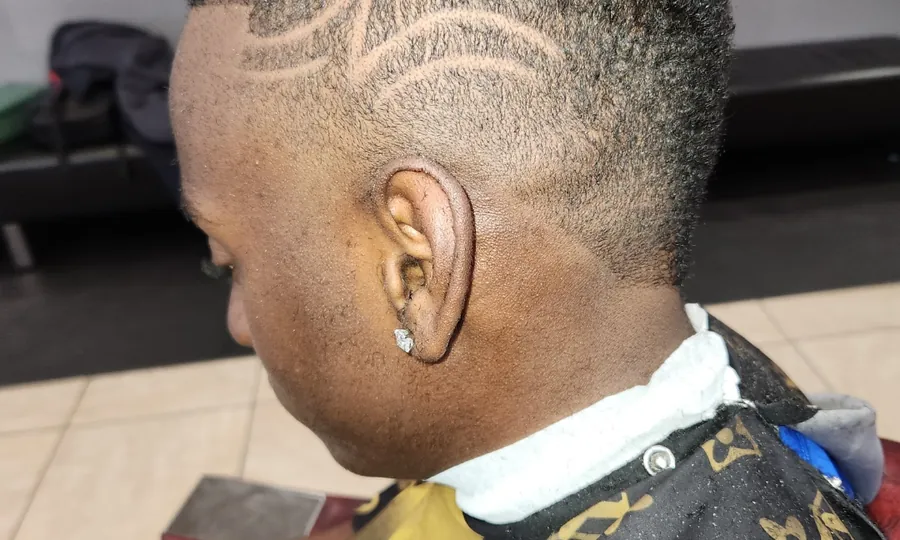
A high taper is the cut you pick when you want the contrast of a fade without losing the whole side of your head. The sides stay short and tight up near the temple, the top keeps its length, and the line between them sits high enough to show from across the street.
In one sentence: a high taper fade blends the hair from skin or a 0 guard at the sideburn up to a 2 or 3 guard, with the blend finishing two to three inches above the ear near the temple and the parietal ridge, while the nape gets the same treatment. It is cut as a fade at $30 at Lilacroix Barbers in Laurelton. The rest of this guide covers how it differs from the low and mid versions, which styles sit on top of it for Black men, what to say in the chair, and how to stop razor bumps after the close work.
What a high taper is and where it starts
A high taper is a taper whose blend starts high, at or just below the temple, and ends at the parietal ridge where the side of the head turns into the top. The sideburn and nape go to skin or a 0 guard, and the hair climbs through the guards over two to three inches instead of the one inch a low taper uses.
The part people miss is that a high taper is still a taper. It fades the perimeter, meaning the sideburns, the area in front of and above the ear, and the neckline. It does not wrap all the way around the back of the head at one height the way a high fade does. On the back of a high taper there is usually a short stretch behind the ear where the blend dips and then rises again at the nape, so from behind the cut still looks like hair with clean edges rather than a bald band.
What makes it work on Black men is the texture contrast. Coily hair on top at an inch or more looks dense and dark, and the skin at the temple looks clean and bright, so the jump between the two reads as a sharp shape. The same cut on fine straight hair looks washed out because the top and the blend are closer in tone. On 4A to 4C hair the high taper is one of the few cuts where you keep a full top and still get a fade level contrast.
High taper vs low and mid taper vs high fade
The quick way to tell these apart is where the blend finishes. Low tapers finish about an inch above the ear, mid tapers around the top of the ear, high tapers near the temple, and a high fade finishes at the same height as the high taper but wraps the whole head.
| Cut | Where the blend ends | Sides | Back of the head | Grows out in |
|---|---|---|---|---|
| Low taper | About 1 inch above the ear | Full length kept | Nape tapered only | 2 to 3 weeks |
| Mid taper | Top of the ear, about 1.5 to 2 inches | Mostly kept | Nape and lower back tapered | 2 to 3 weeks |
| High taper | Temple to parietal ridge, 2 to 3 inches | Short at the front, kept behind the ear | Dips behind the ear, nape tapered | About 2 weeks |
| High fade | Parietal ridge all the way around | Gone | Faded at one height | 10 to 14 days |
| Skin fade | Any height, to bare skin | Gone | Bald at the bottom | 7 to 10 days |
Against the drop fade and the burst fade, the difference is shape rather than height. A drop fade curves down behind the ear toward the nape. A burst fade curves around the ear in a half circle and leaves the nape longer. A high taper is a straighter line that climbs at the front and settles at the back. If you are deciding between the high and low versions, our guide to the low taper fade for Black men covers the lower end in the same detail.
Styles for Black men: short crop, waves, afro top, twists, with a beard
The high taper is a frame. What goes inside it is the style, and in our chairs these five come up most.
Short crop with a line up
Half an inch to an inch on top, sponged or brushed, with the high taper climbing to meet it and a squared line up across the front. This is the everyday Southeast Queens version and the one that grows out cleanest.
360 waves with a high taper
Wavers usually prefer a low or mid taper so the pattern keeps rolling into the sides, but a high taper works if the top is brushed at a 1.5 or a 2 and the taper comes up to meet the pattern at the temple. Ask the barber to cut with the grain so the wave pattern is not disturbed.
Afro top with a high taper
Two inches or more of picked out afro on top, with the high taper carving a clean shape underneath. This is close to a high top fade but softer, because the back is tapered rather than squared. The afro is $30 on our list and the taper is cut into the same service.
Twists, coils or a curly sponge top
Two strand twists, finger coils or sponge curls on top with the high taper underneath. The high placement shows more skin at the temple than a low taper would, so the twists look like they are sitting on a clean base. Keep the blend finishing at a 2 so the twists have something to meet.
High taper with a beard
With a beard, the barber fades the sideburn into the beard instead of ending the taper at skin, so the beard and the hair read as one shape with a line up on both. If the beard is part of the plan, the Cut and Beard package bundles the haircut, the line up, the beard trim and the razor beard line.
Choosing by hair type and face shape
The high taper suits dense hair and faces that can take some height. Thin hair at the temples and long faces need a lower blend or a different cut.
By hair type
- 4C and 4B coils: the best match. Dense coils hide the steps between guards, so the blend looks smooth even when it covers three inches. Finish the blend at a 2 or a 3.
- 4A coils and 3C curls: good, but the top needs shears, not a guard, or the curl pattern breaks where it meets the taper.
- 3A and 3B loose curls: the blend shows more, so ask for a longer blend that finishes at a 3 and leave more length on top to balance it.
- Thinning at the temples: a high taper to skin puts the thin spot on display. A mid taper into a 1.5 looks fuller.
- Locs and braids: a high taper under locs exposes the parting pattern at the sides. Most men with locs want it lower.
By face shape
- Round: the high taper is the cut for you. The high line and the height on top stretch the face.
- Square: works well with a rounded line up and a bit of length on top so the jaw is not the only angle on the face.
- Oval: everything works, including a skin high taper with a hard part.
- Long or oblong: go lower. A high taper plus a tall top makes a long face longer.
- Heart or diamond: the high taper narrows the temples, which are already the narrow part. Pick a mid taper instead.
How to ask your barber for a high taper
Say high taper, say what you want at the bottom, say what guard you want at the top of the blend, and say what happens on top. Four pieces of information and a photo, and the barber has everything he needs.
- The name. Say high taper, not high fade, unless you want the sides gone all the way around.
- The bottom. Skin, a 0, or a 0.5. If you get razor bumps, say a 0 guard and no razor.
- The top of the blend. A 2 is the standard finish. A 3 is softer and grows out slower. A 1.5 is tighter and shows more skin.
- The top of the head. Length in inches or in guard numbers, and whether you want it sponged, picked, brushed or left alone.
- The line up. Natural, squared, or rounded corners. Say if you want the hairline left exactly where it is.
Bring a photo of a man with your hair texture. A high taper on straight hair from a social feed does not tell your barber what the blend will look like on 4C, and he will be guessing at what you liked about the picture. Mention cowlicks, scars and a crown that grows in a circle, because the barber can hide all three if he knows before he starts.
The common mistakes in the chair are asking for a high fade when you meant a taper, asking for skin when your temples are thinning, and letting the line up creep back at the corners. If you are not sure, ask for the blend to finish lower and tighter the next time; hair you kept can always come off, and hair you lost takes two weeks to come back.
Preventing razor bumps and irritation after a close taper
A high taper puts skin level cutting over a bigger area than a low taper, so razor bumps and irritation show up more often on the temples and the nape. The fix is mostly about what you ask for at the bottom of the blend and what you do in the first 48 hours.
Razor bumps, which doctors call pseudofolliculitis barbae, happen when a tightly curled hair is cut short enough to curl back into the skin. Black men get them more because of the curl, and the temples and nape of a high taper are the two places where the hair is shortest. A hair cut with a 0 or a 0.5 guard sits just above the skin and has a harder time curling back in than a hair shaved below the surface with a razor or a foil shaver. If you bump easily, ask for the guard and skip the razor finish, and ask the barber to cut with the grain on the neck.
After the cut, keep the skin clean and leave it alone. An alcohol free aftershave or a plain fragrance free moisturizer on the taper the first two days reduces the sting. A wash with salicylic acid or glycolic acid a few times a week may help some men keep the follicle open so the hair grows out instead of in. Do not pick, squeeze or shave the bumps yourself, because that is how the dark marks start, and post inflammatory marks on dark skin can outlast the bump by months. Clean guards and a sanitized blade matter too, so it is fair to ask what the barber does between clients.
If you get bumps every time no matter what the barber does, or they are leaving scars or keloids, see a dermatologist. There are prescription options a barber cannot offer, and a persistent case is a skin condition rather than a haircut problem. Our guide to razor bumps on Black skin goes through the full routine.
Styling at home and the products that help
Styling a high taper is really styling the top, because the taper takes care of itself. The routine depends on what is up there.
Short crop or Caesar
Damp the hair, work in a small amount of curl cream or a light pomade, brush forward or sponge in small circles, and let it dry. The whole thing takes two minutes. Heavy pomades and waxes sit on coils and turn white, so stay with water based products.
Waves
Brush for a few minutes morning and night with a medium brush, apply a light moisturizer or pomade before brushing, and sleep in a durag or wave cap. The high taper does not change the wave routine; it just means the pattern ends at the temple instead of running down the side.
Afro, twists and curly tops
Hydration is the whole job. A leave in conditioner on damp hair, a light oil to seal it, and a pick or sponge to shape it. Blow drying on low heat with a pick attachment gives an afro more height for the day, but daily heat dries coils out, so keep it for occasions. Twists get retwisted every week or two with a cream or gel.
Products worth owning
- A leave in conditioner or curl cream for daily moisture
- A light oil for the top and for the faded edge, which dries out first
- A water based pomade or a styling cream for hold without buildup
- A wave brush or a curl sponge depending on the top
- A satin lined durag or cap for sleeping
- A clarifying shampoo once a week to clear buildup from the products above
Texture clay and molding paste are fine on short straight or wavy tops but tend to clump coily hair, so if you are 4A or tighter, a cream or a gel gives a cleaner result.
Maintenance: every two weeks, line up between
A high taper looks sharp for about two weeks. Because the blend climbs three inches, the sides fill in visibly as soon as the hair grows a quarter inch, which is roughly two weeks of growth for most men.
| Service | How often | Price at Lilacroix |
|---|---|---|
| Fade (the high taper is cut as one) | Every 2 weeks | $30 |
| Line up between fades | Week 1 after the cut | $16 |
| Taper only, no fade on the sides | Every 2 to 3 weeks | $25 |
| Kids cut with a high taper | Every 2 to 3 weeks | $20 |
| Beard trim and sculpt | With the cut | Call for pricing |
Most men on a high taper settle into one of two rhythms. The first is a fade every two weeks and nothing in between, which costs $30 twice a month. The second is a fade, then a $16 line up a week later, then a fade again, which keeps the hairline crisp through the whole cycle. Both work, and the second is what wavers and men with beards tend to prefer.
Daily care between visits is short. Brush or sponge the top, moisturize it, oil the taper after a wash so the short hair does not look gray, and sleep in a durag so the top does not flatten on one side. Wash once or twice a week with a sulfate free shampoo, and leave the edges to the barber. The full list of cuts and prices is on the services page.
Get a high taper at Lilacroix Barbers in Laurelton
Lilacroix Barbers is at 232-12 Merrick Blvd in Laurelton, Queens, and we cut high tapers on men and boys every day of the week. Walk ins are welcome, and you can call (718) 749-5800 to check the wait. Hours are Monday to Thursday 7:30 AM to 7 PM, Friday and Saturday 7 AM to 7 PM, and Sunday 7 AM to 5 PM.
The Q5, Q86 and Q87 stop at Merrick Boulevard and 233rd Street right outside, along with the QM63 and QM65 express buses, and the Rosedale LIRR station is about twelve minutes on foot. The fade is $30 and the line up is $16; see the full price list on our services page.
Questions readers ask
Is a high taper the same as a high fade?
No. A high taper only fades the perimeter, climbing high at the temple and dipping behind the ear. A high fade wraps the whole head at one height, so the sides and back are short all the way around.
How long does a high taper fade last?
About two weeks before the blend softens, because the taper covers two to three inches and shows a quarter inch of growth quickly. A $16 line up in week one stretches the look.
Does a high taper work on 4C hair?
It is one of the best cuts for 4C. Dense coils hide the steps between guards, so the three inch blend looks smooth, and the dark top against the clean temple gives strong contrast.
Can I get a high taper with a beard?
Yes. The barber fades the sideburn down into the beard instead of ending it at skin, so the hair and beard read as one shape with a line up on both.
What guard should I ask for on a high taper?
Most men ask for skin or a 0 at the bottom with the blend finishing at a 2. A 3 is softer and grows out slower; a 1.5 is tighter and shows more skin at the temple.